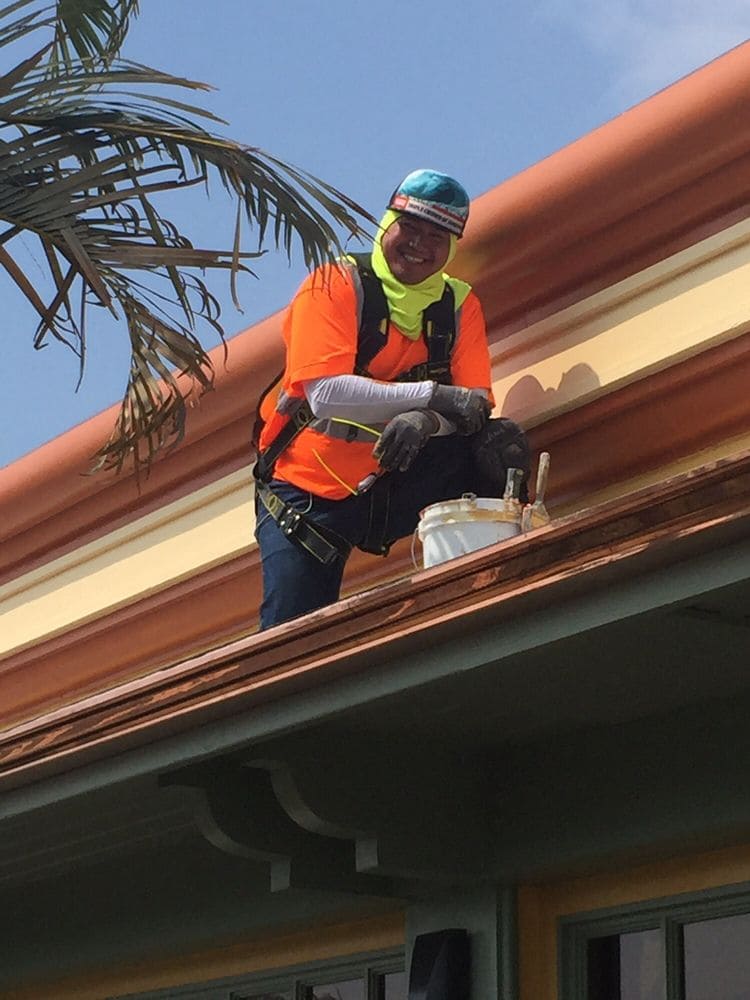
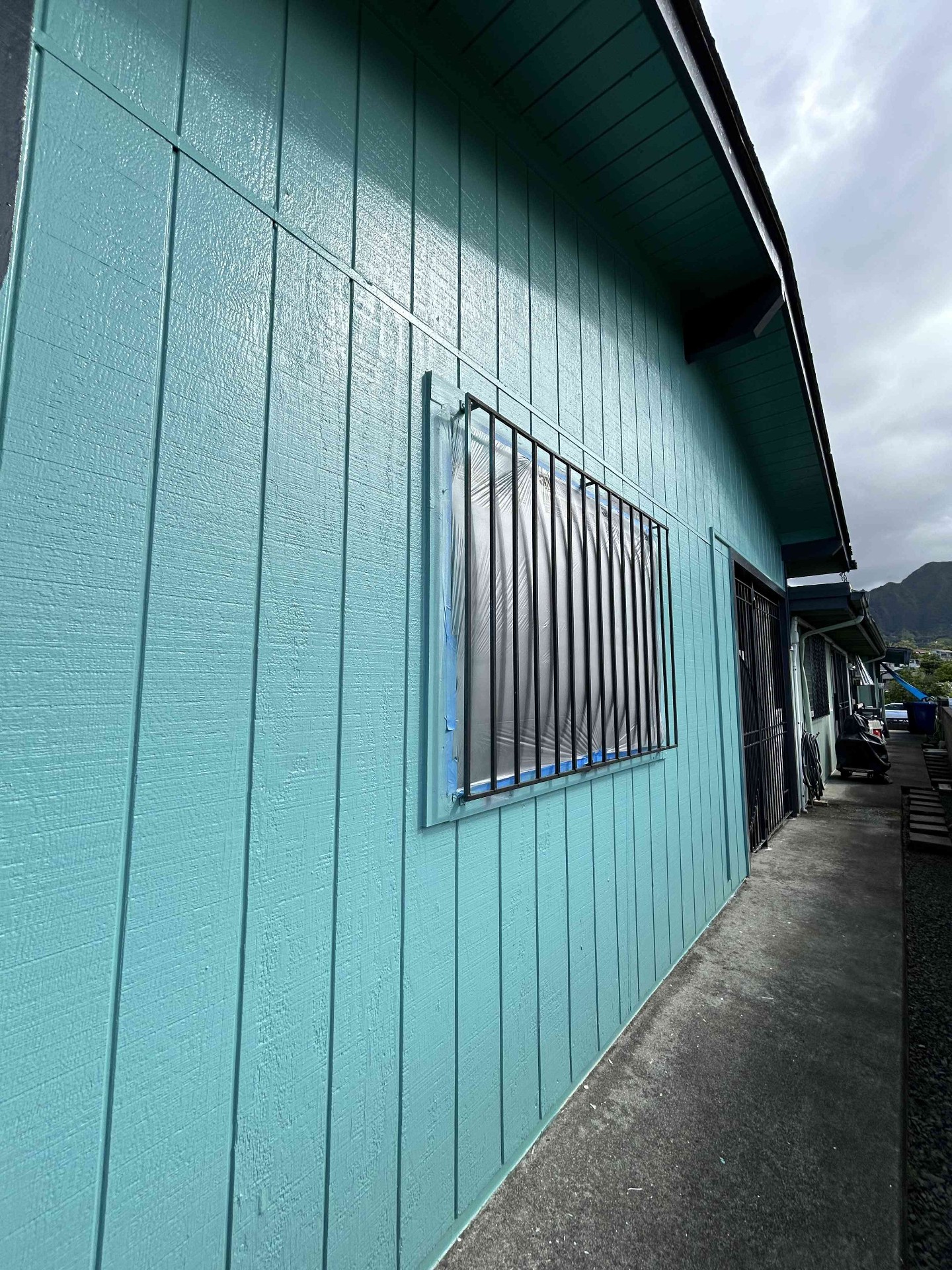
Paint does not age on a fixed calendar in Hawaii. Two Oahu homes painted during the same month can need attention years apart. One may sit inland and sheltered. The other may face the ocean, take full afternoon sun, and catch salt-laden trade winds every day. That difference matters more than any generic rule.
The quick answer
Plan to have an Oahu exterior evaluated around the three-year mark and every year after that. A properly prepared exterior with a quality coating will often give you about five to seven years before a full repaint. Hard-hit coastal homes, exposed wood siding, trim, and older paint systems may need repainting closer to three to five years. Protected stucco or concrete in favorable conditions can sometimes remain sound for seven to ten years. Interior paint usually lasts longer: five to eight years in bedrooms and living areas, and three to five years in kitchens, bathrooms, laundry rooms, hallways, and busy family spaces.
These are planning ranges, not warranties. Condition beats age.
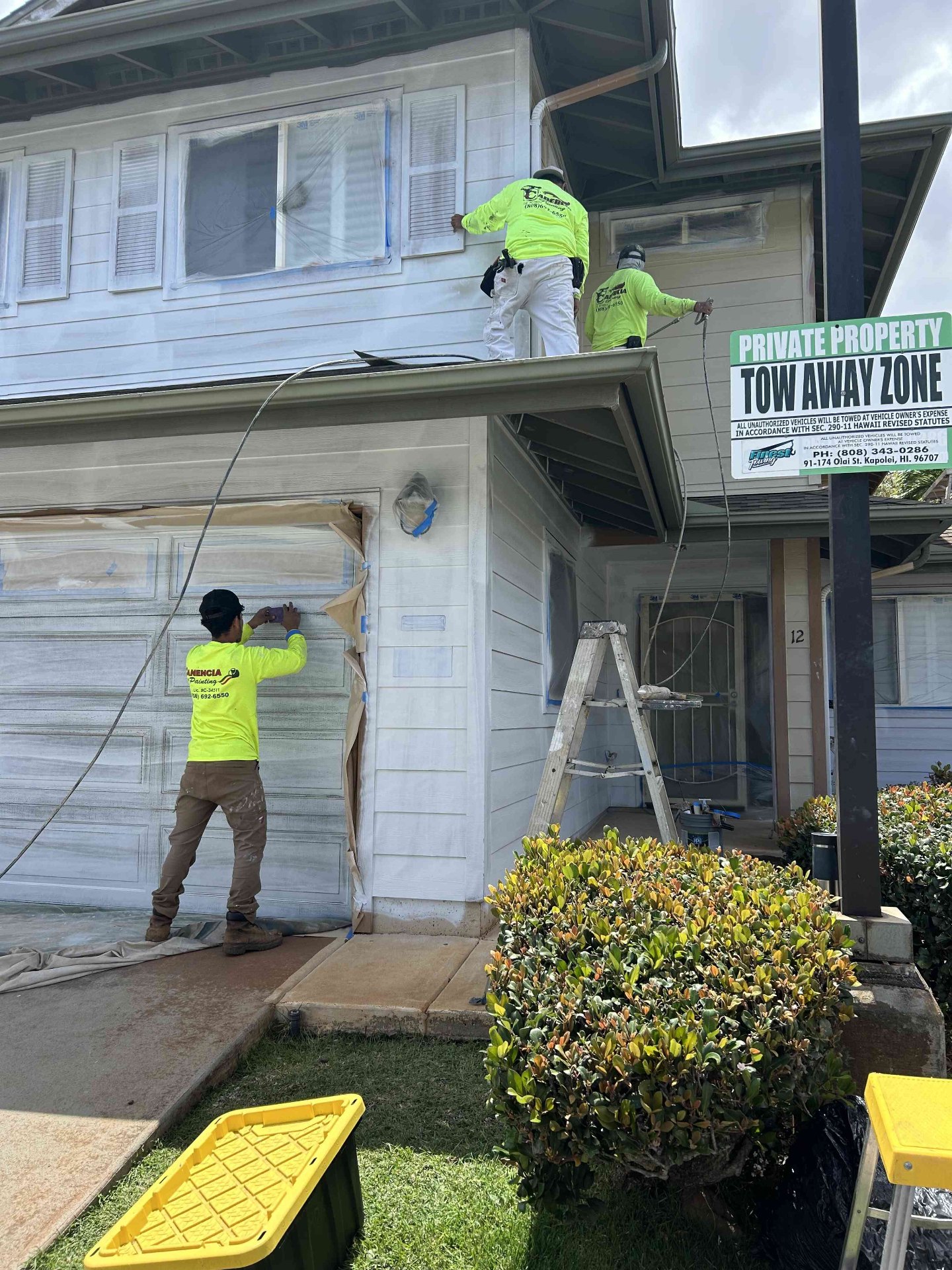
Hawaii House Repainting Timeline at a Glance
| Surface or area | Planning range | What shortens it |
|---|---|---|
| Wood or T1-11 siding | 3-5 years | Full sun, open joints, swelling, coastal exposure |
| Stucco exterior | 5-7 years | Cracks, chalking, trapped moisture, poor prior prep |
| Concrete or CMU exterior | 5-8 years | Efflorescence, moisture movement, incompatible coatings |
| Fascia, trim, doors, exposed eaves | 2-4 years | Direct UV, wind-driven rain, failing caulk, end-grain exposure |
| Metal gates, railings, fasteners | Inspect yearly | Salt deposits, scratches, early rust |
| Exterior stained wood or decks | 2-3 years | Foot traffic, standing water, direct sun |
| Interior bedrooms and living rooms | 5-8 years | Children, pets, open windows, frequent cleaning |
| Kitchens, bathrooms, laundry rooms | 3-5 years | Humidity, condensation, grease, mildew |
| Interior ceilings and low-use rooms | 7-10 years | Roof leaks, condensation, stains, poor ventilation |
Your home may fall outside these ranges. A sheltered leeward concrete home and an oceanfront wood home should not be put on the same schedule.
Why Exterior Paint Breaks Down Faster in Hawaii
Oahu exposes paint all year, and three forces tend to overlap.
1. UV exposure fades color and weakens the paint film
Ultraviolet exposure gradually degrades the coating, reducing gloss and contributing to chalking. South- and west-facing walls usually take the hardest hit, especially with little shade.
Run your hand across an older exterior wall. If a powdery residue comes away on your fingers, the paint is chalking. Light chalking does not always mean the whole home needs immediate repainting, but heavy chalking tells you the surface is losing integrity and will need thorough preparation before another coat can bond.
Deep reds, blues, and other saturated shades often show fading sooner than soft neutrals. A faded wall may still be sealed, but uneven fading is a reason to inspect the complete paint system.
2. Salt air attacks the weak points
Salt exposure is strongest near the coast, but trade winds carry it inland. Residue collects on walls, trim, railings, and fasteners. It can retain moisture, accelerate metal corrosion, and interfere with adhesion if preparation does not remove it.
A coastal repaint is not simply another coat. The surface needs correct washing, removal of loose material, rust treatment, new caulk where needed, and suitable primer on bare areas. Paint over contamination can fail from underneath.
3. Humidity, rain, and mildew keep surfaces under pressure
Shaded walls, north-facing elevations, areas beneath eaves, and windward homes tend to stay damp longer. That creates favorable conditions for mildew and can slow the drying of wood, masonry, caulk, and old coatings.
Mildew does not always require a complete repaint. If the coating remains firmly bonded, cleaning may restore it. Recurring growth can point to trapped moisture, poor airflow, a leak, or a depleted coating.
Do not seal the problem under fresh paint. The U.S. Environmental Protection Agency advises cleaning mold and drying the surface before painting, because paint applied over moldy material is likely to peel.
Your Home's Material Changes the Repaint Schedule
The words "exterior paint" cover several very different systems. What is underneath the paint determines how the coating should be prepared and how failure appears.
Wood and T1-11 siding
These move with moisture. Open seams, exposed end grain, cracks, and failed caulk allow water behind the coating. Waiting after peeling starts can turn repainting into repair.
Stucco
Holds paint well when clean, dry, and stable. Hairline cracks, chalking, and moisture intrusion need attention first. Rolling over a crack will not stop it from returning.
Concrete and CMU block
Can move moisture and salts through the wall. White, powdery efflorescence is a clue. Clean it and understand the moisture source before applying a compatible masonry system.
Metal railings, gates, and fasteners
Often show salt damage first. Treating small rust spots early limits the preparation required later.
Sherwin-Williams likewise emphasizes that substrate condition, cleaning, moisture repair, and crack repair are central to coating performance. The product matters, but it cannot compensate for a wet, dirty, unstable surface.
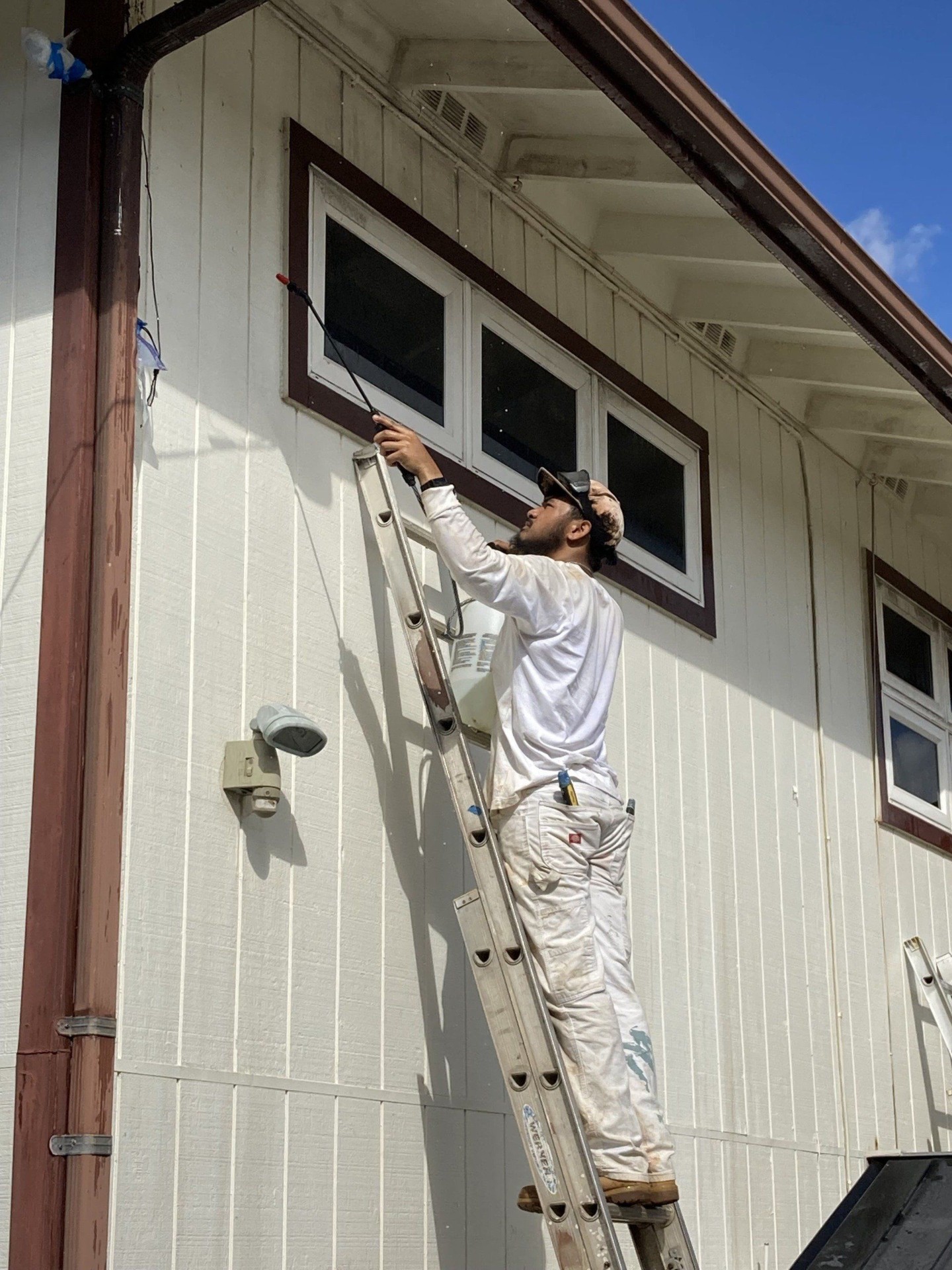
The Signs Matter More Than the Number of Years
Do not wait for large sheets of paint to peel. The best time to repaint is often while most of the existing coating remains intact. Watch for these warning signs:
- Chalking: Powder transfers to your hand when you rub the wall.
- Uneven fading: The west or south side looks noticeably lighter than protected elevations.
- Cracked or missing caulk: Gaps appear around windows, doors, trim joints, and penetrations.
- Peeling, bubbling, or blistering: Moisture, heat, contamination, or poor adhesion may be affecting the film.
- Hairline stucco cracks: Small cracks can admit water and show through a new coat if ignored.
- Recurring mildew: Growth returns quickly after cleaning, especially under eaves or on shaded walls.
- Exposed wood or masonry: The protective film has worn away and the substrate is taking direct weather.
- Rust staining: Metal fasteners or railings are corroding beneath or beside the coating.
Fading alone can be mostly cosmetic. Peeling, open cracks, exposed wood, and rust are protective failures. Those deserve faster action.
How Often Should You Repaint the Interior in Hawaii?
Island living still affects interior walls. Open windows bring humid air and dust inside. Bathrooms and laundry areas hold moisture. Air conditioning can create condensation. Busy households add scuffs, fingerprints, and repeated cleaning.
- Repaint bedrooms and living rooms about every five to eight years, or when the walls no longer clean well.
- Repaint hallways, children's rooms, and high-traffic family areas about every three to five years.
- Repaint kitchens, bathrooms, and laundry rooms about every three to five years, with moisture and ventilation checked first.
- Repaint trim, doors, and baseboards when the finish becomes chipped, worn, or difficult to clean, often before the walls need it.
- Repaint ceilings only as needed unless stains, mildew, or color changes appear. Find and correct any leak before covering a stain.
For a complete Interior House Painting Oahu project, product selection should follow the room. Washability helps in hallways and kitchens. Moisture resistance matters in bathrooms. Lower sheen can hide imperfections, while washable finishes often suit trim and doors.
How to Make an Exterior Paint Job Last Longer
The biggest gains come from maintenance and preparation.
- Inspect every six to twelve months. Check the sunniest wall, shaded eaves, window joints, lower walls, railings, and rain paths.
- Wash away dirt, mildew, and salt. Appropriate cleaning removes contaminants. Excessive pressure can damage paint, force water behind siding, and scar softer materials.
- Touch up failures early. Correct chipped metal and failed caulk before rust or water spreads.
- Fix moisture sources. Leaks, failed flashing, sprinklers hitting walls, and poor drainage can defeat premium paint.
- Use a complete system. Cleaning, scraping, repair, primer, caulk, and finish coats must work together.
- Schedule around conditions. A dry window, surface temperature, direct sun, dew, recent rain, and substrate moisture matter more than the calendar month.
For a full Exterior House Painting Oahu project, our team uses premium Sherwin-Williams coatings when they fit the job and remains flexible if you prefer another brand. The coating is selected for your surface and exposure, not just for the name on the can.
Should You Repaint Everything at Once?
Not necessarily. One elevation often ages faster. The west wall may fade first, the ocean-facing side may collect salt, and shaded eaves may develop mildew while sunny masonry remains clean.
A targeted maintenance coat can work when the color matches and the surrounding system is sound. Repaint fully when failure is widespread, colors no longer match, or multiple layers are losing adhesion.
Photos show fading and peeling, but may miss chalking, moisture, loose layers, soft wood, and failed joints.